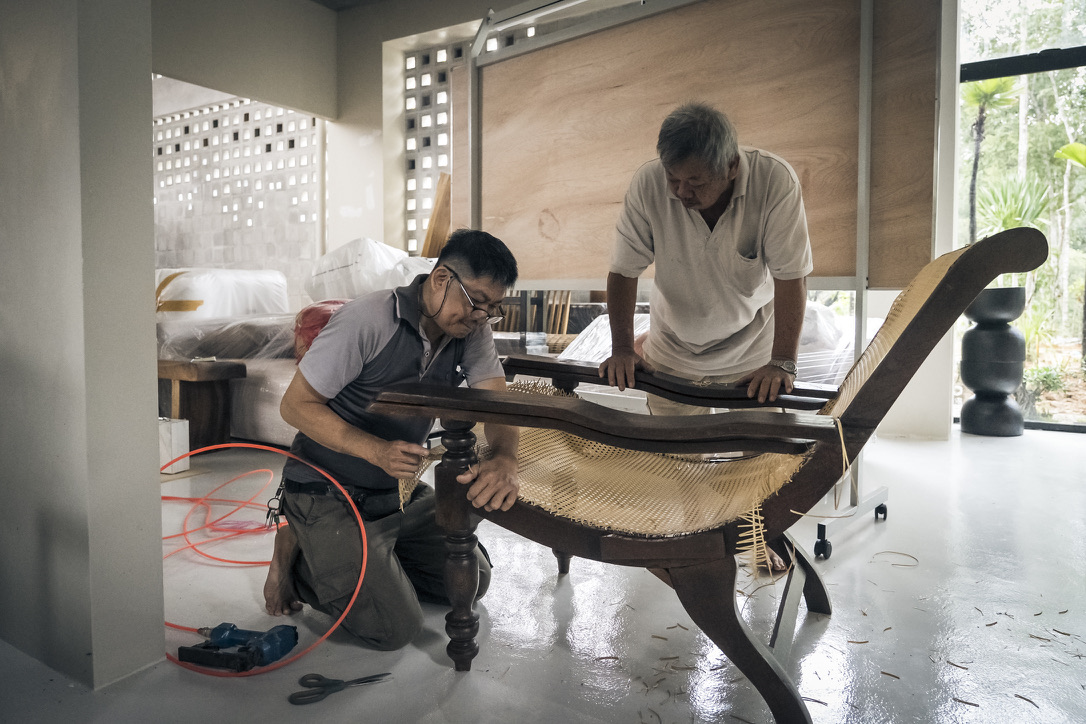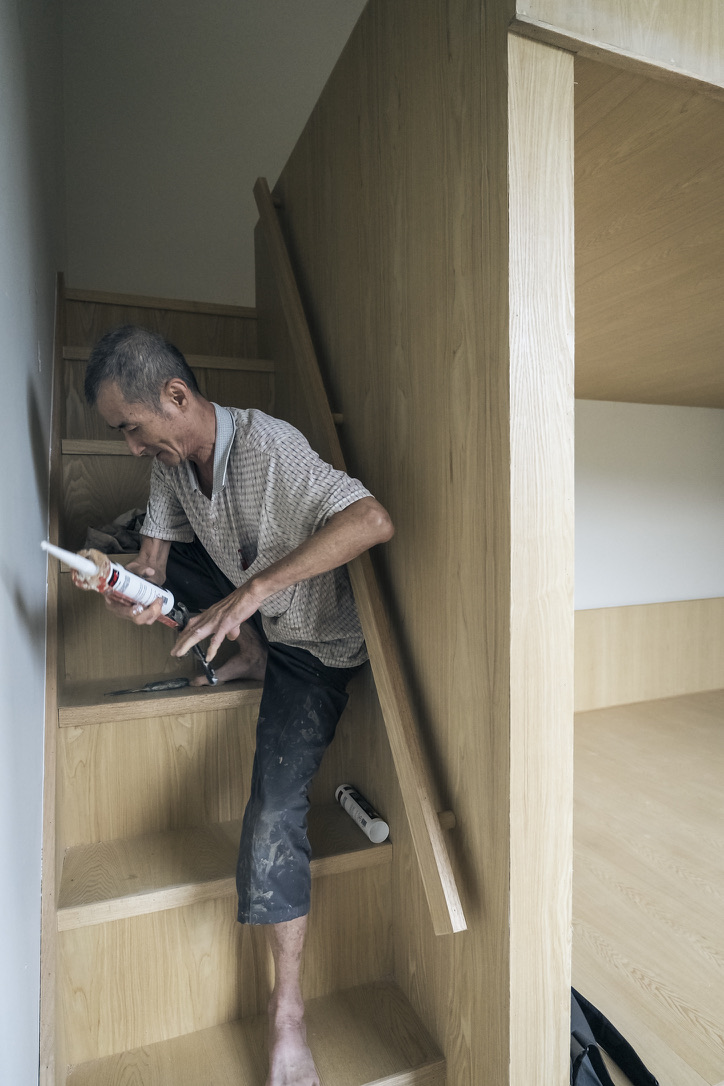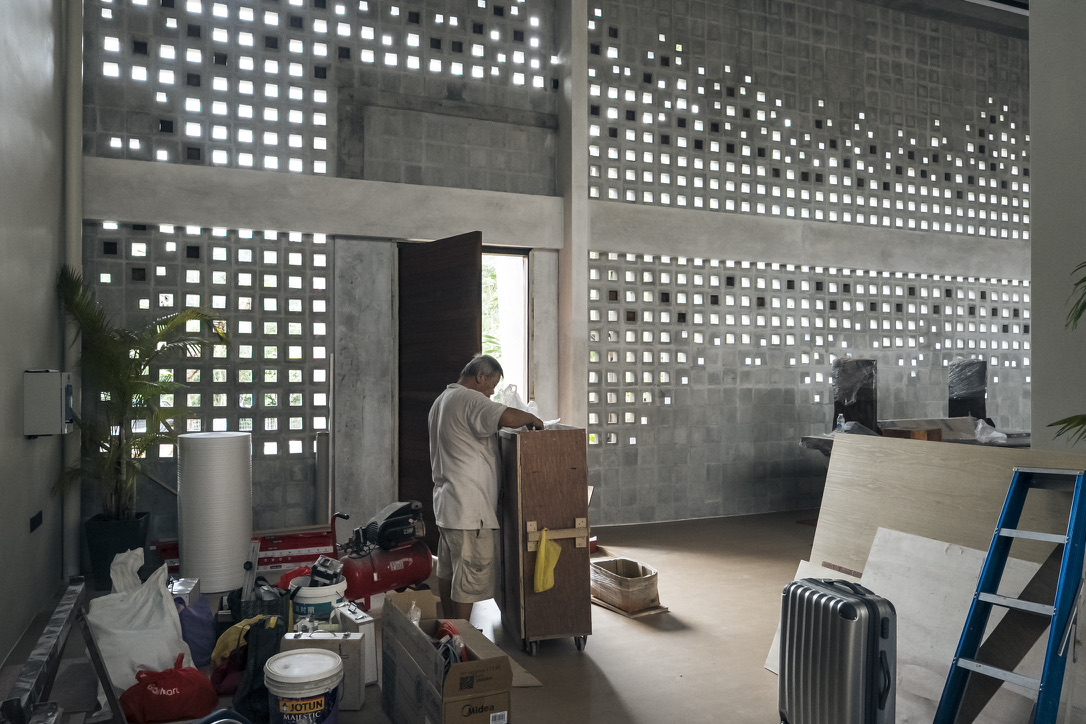
They arrived each morning in an old Proton Wira. Phang, 62. Siew, 59. Yip, 65. Three carpenters of different shapes, different temperaments, different rhythms. What they shared was time. Decades of it. Years spent building side by side, learning one another not through conversation alone, but through repetition. The job that brought them here was 2 Rivers, an ecolodge in Tanjung Malim managed by Djungle People, built between two rivers and wrapped in forest. The kind of place that asks a great deal of the people who build it.
Every day, they drove one and a half hours from Kuala Lumpur to Tanjung Malim, long before the site stirred. The same car. The same seats. The same road unfolding and folding back into itself. One can imagine the conversations inside that Wira. Practical at first, then drifting. Traffic. Weather. A job done badly somewhere else. A joint that didn’t sit right yesterday. Sometimes silence, thick and companionable. Sometimes laughter. Sometimes disagreement that never quite hardened into anger. By the time they arrived, the day had already been negotiated.
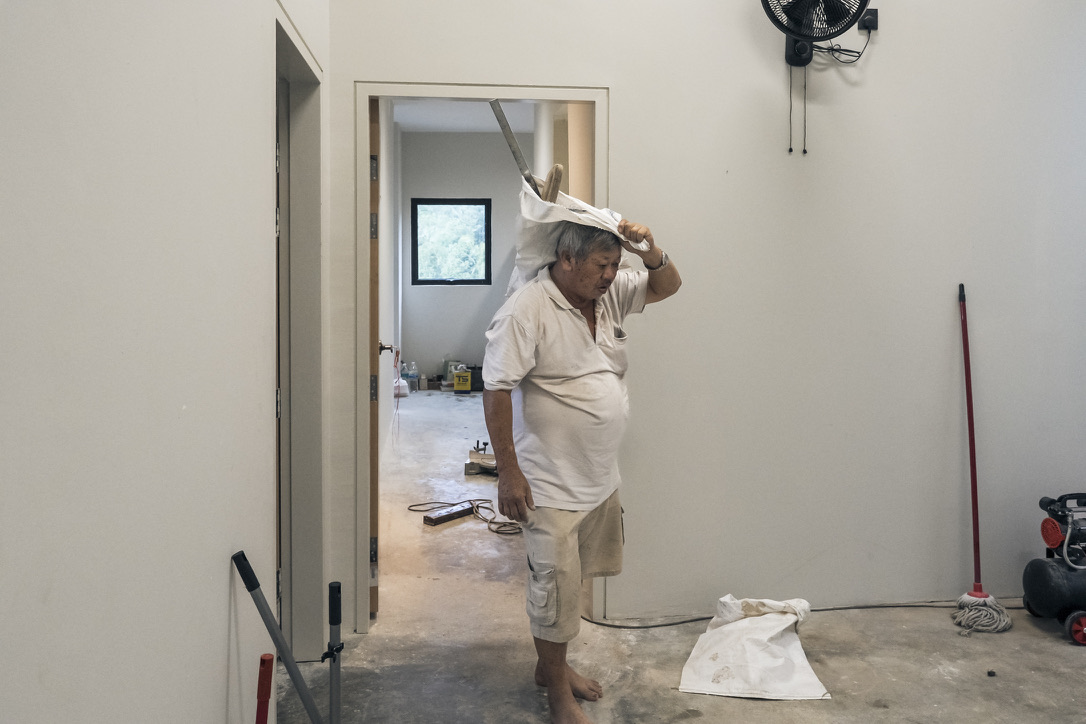
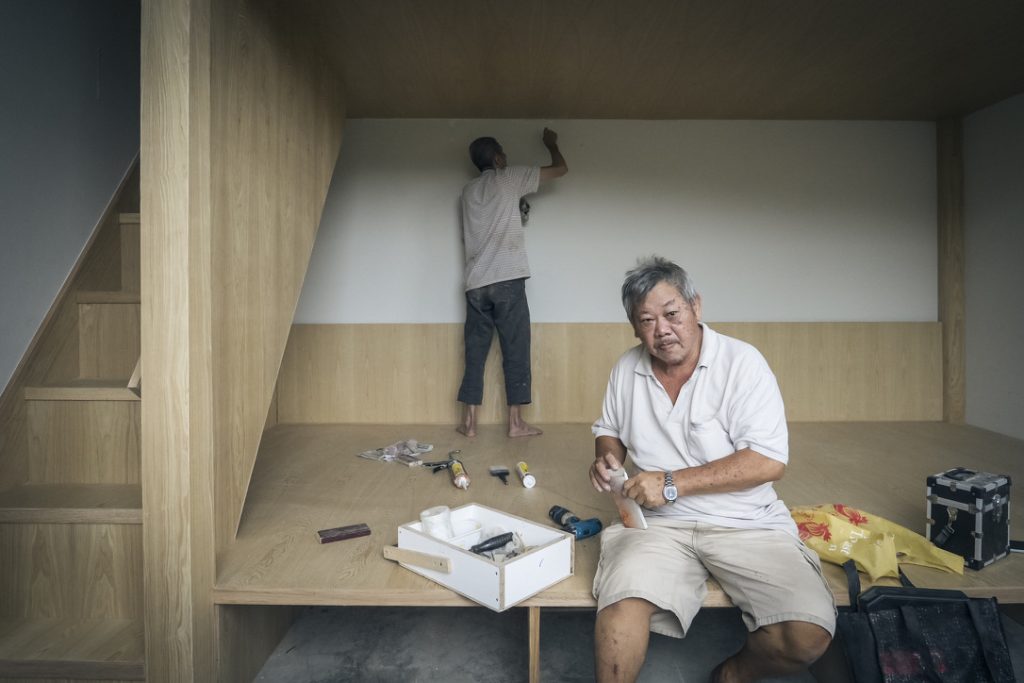
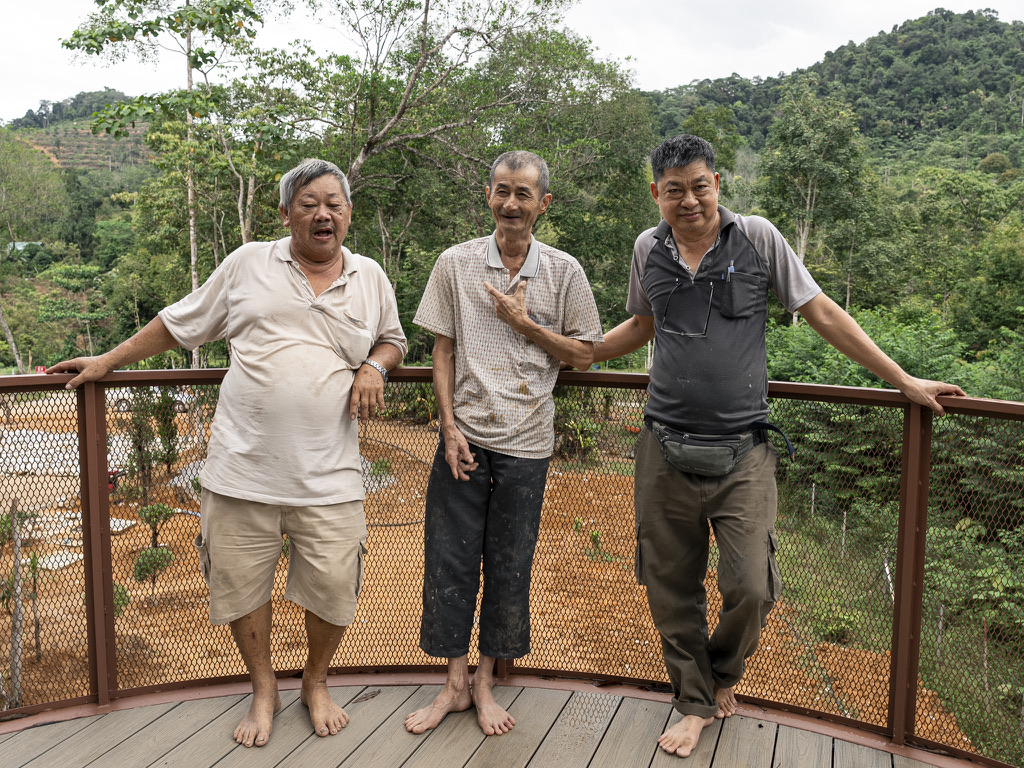
Phang was the leanest of the three, light on his feet, almost spare in the way he moved. Siew, more muscular and solid, carried himself with the confidence of someone used to lifting, bracing, anchoring. Yip, rounder and softer in build, was the warm centre of the three. Smiling easily, watching carefully, speaking when something truly needed to be said.
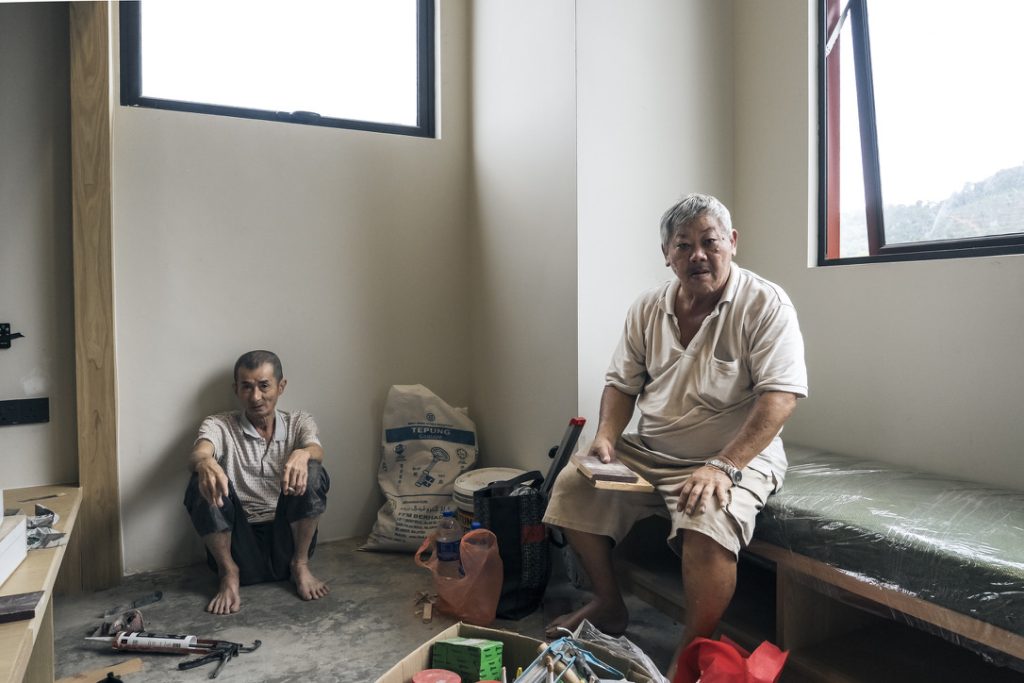
There was no ceremony to how they worked. No instructions barked, no plans constantly consulted. They flowed around one another with the ease of men who had learned each other’s habits long ago. When one reached for a tool, another was already stepping aside. When something went wrong, voices rose briefly, then fell just as quickly. The work resumed. This was not harmony born of politeness, but of familiarity.
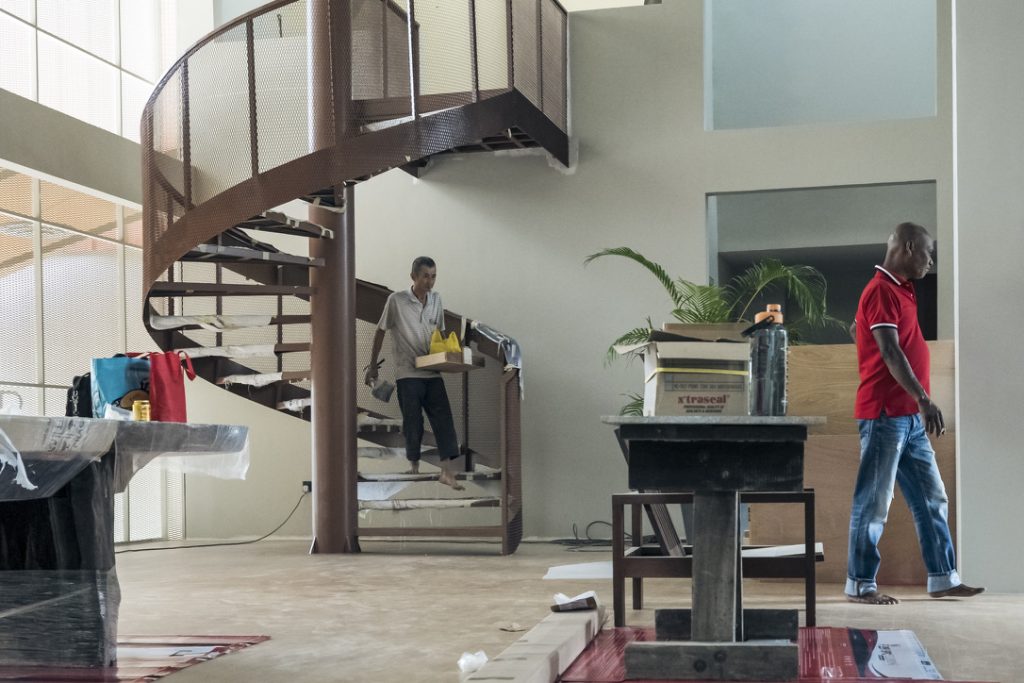
At 2 Rivers, their task was nearly complete. The final days were no longer about construction, but inspection. They walked slowly through the site, fingers brushing railings, eyes lingering on joints and edges. They noticed things no one else would ever see. Small imperfections, quiet alignments, places where wood met wood and time would eventually leave its mark. A carpenter’s eye rarely switches off. Even when the work is almost finished, they continue looking for something that can be made just a little better.
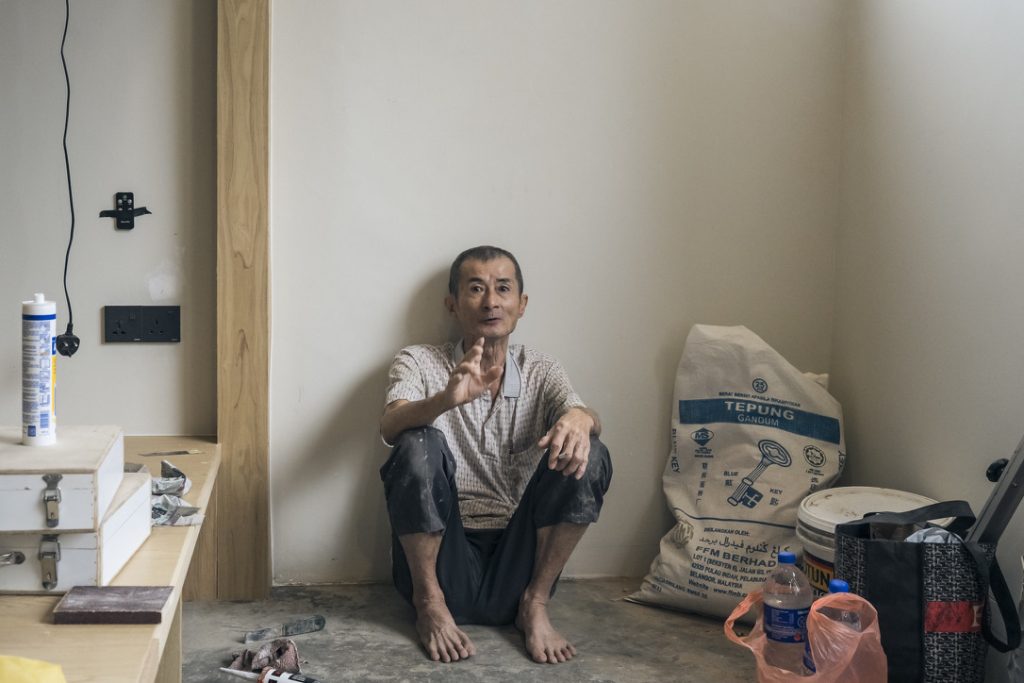
In the first days, they had pushed raw materials themselves. Heavy loads up to the first and second floors, bodies insisting they could still do what they once did. Eventually, strain made itself known. Younger men on site stepped in to help, without discussion, without embarrassment. Nobody announced it. Nobody made a fuss. On sites like this, respect does not need explanation. When three uncles have already given everything they can, help arrives quietly.
When asked to stand together for a photograph on the balcony overlooking the forest, they refused to put their arms around one another. The suggestion horrified them.
“No!”
They laughed and stepped away as though I had suggested something completely absurd. Touch, for men like these, was functional. A hand steadying a beam, a shoulder taking weight. Anything else felt unnecessary, even exposing. Their closeness had already been proven through years of shared labour and thousands of kilometres in the same car.
In the first days, they had pushed raw materials themselves. Heavy loads up to the first and second floors, bodies insisting they could still do what they once did. Eventually, strain made itself known. Younger men on site stepped in to help, without discussion, without embarrassment. Nobody announced it. Nobody made a fuss. On sites like this, respect does not need explanation. When three uncles have already given everything they can, help arrives quietly.
When asked to stand together for a photograph on the balcony overlooking the forest, they refused to put their arms around one another. The suggestion horrified them.
“No!”
They laughed and stepped away as though I had suggested something completely absurd. Touch, for men like these, was functional. A hand steadying a beam, a shoulder taking weight. Anything else felt unnecessary, even exposing. Their closeness had already been proven through years of shared labour and thousands of kilometres in the same car.
For men like these, affection is found somewhere else. In arriving every morning at the same place. In waiting for one another. In sharing the same car for countless journeys. In passing a tool before it is asked for. In showing up again tomorrow.
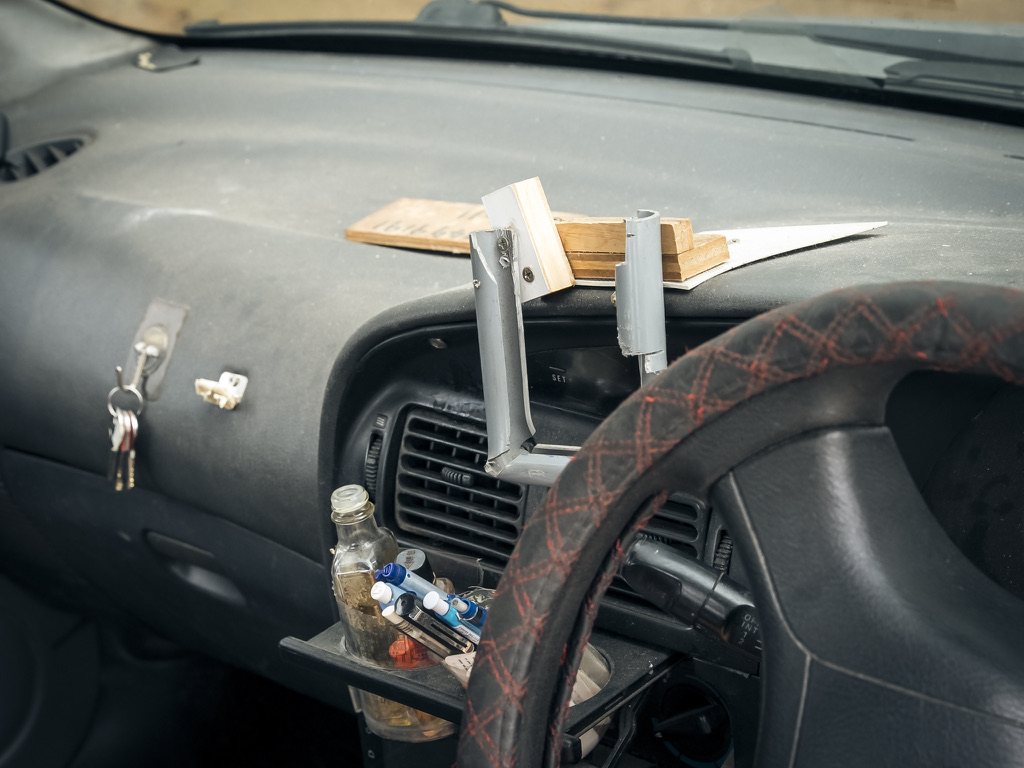
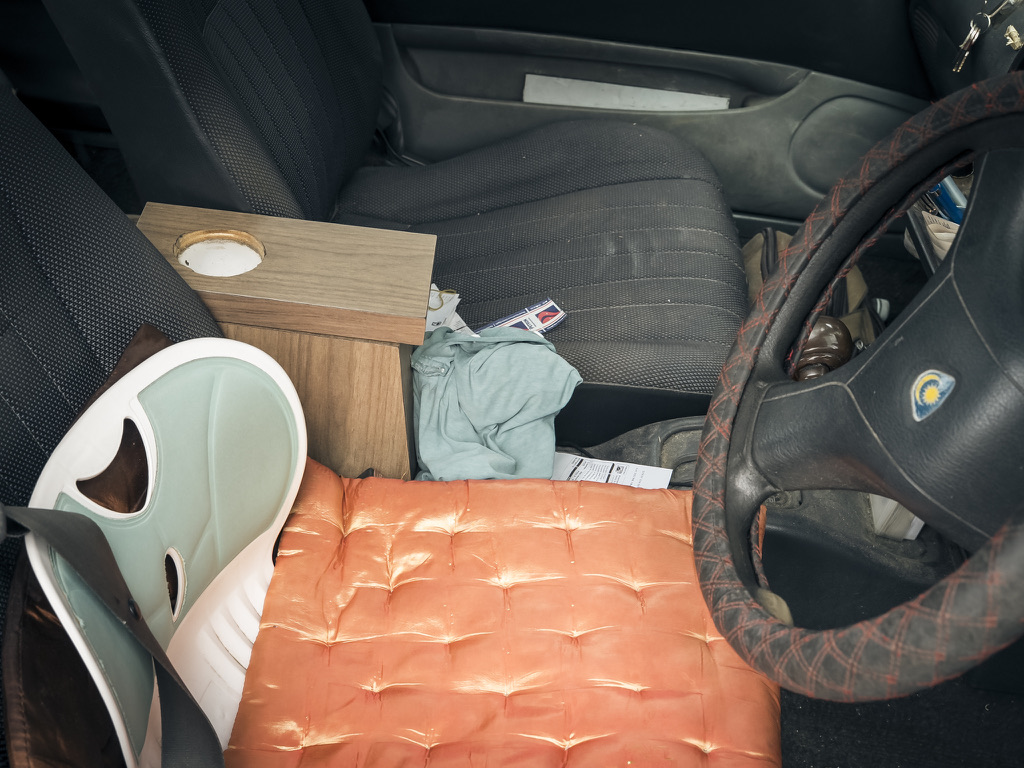
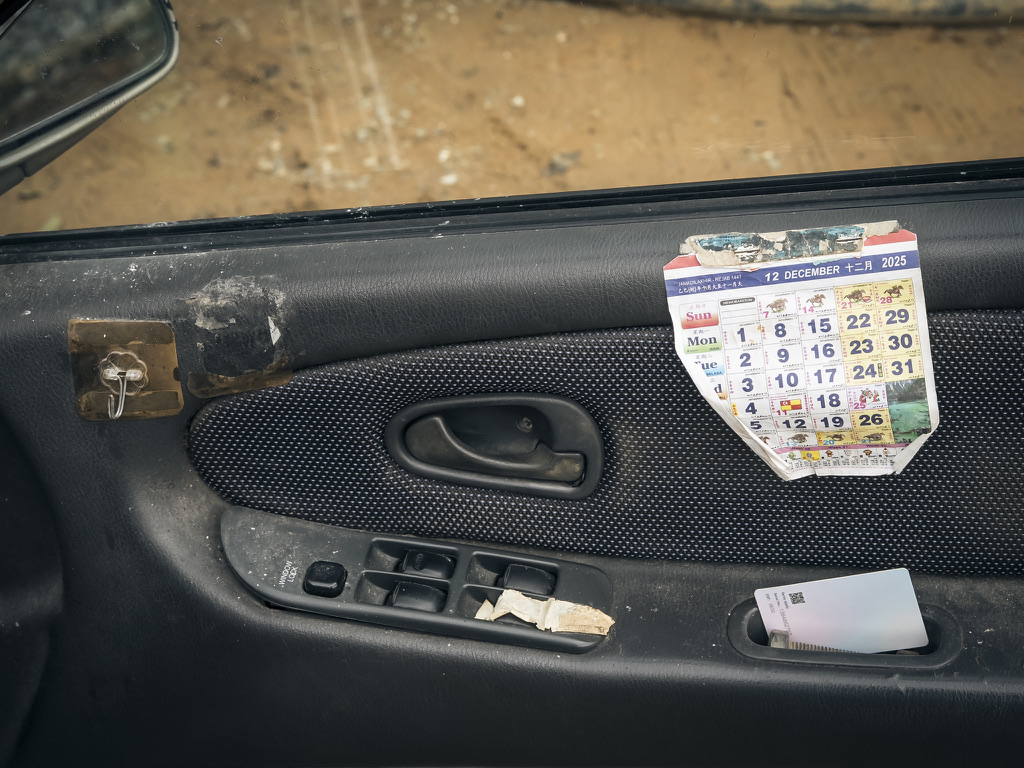
Inside their Proton Wira, the same thinking prevailed. A wooden console they had built themselves sat near the handbrake. A phone holder fashioned from plastic pipe and wood was fixed to the dashboard. A phone number, written on a small piece of wood, rested in plain sight in case the car ever blocked someone else. A Chinese calendar for December was taped to the door. Not decoration, but reference. Time mattered. Dates mattered. Work mattered. Even inside the car, they could not help but build.
It was Yip who answered when asked what it felt like to build beautiful things without staying to enjoy them. He smiled, thought for a moment, then spoke simply. Enjoyment was not the point. Satisfaction came from knowing the work was done properly. That it would hold. That others would use it long after they had left.
They build beautiful things for other people. And for themselves, they build only what is necessary.
As I watched the three men climb back into their old Wira for the journey home, I realised that perhaps the retreat was never the real story. The real story had been travelling to work together every morning for years.
By the end of the day, Phang, Siew, and Yip would return to their car and begin the long drive back to Kuala Lumpur. Another site finished. Another place left behind. The forest would remain. The structure would remain. And somewhere on the road home, the conversation would continue, until the next morning, when it all began again.