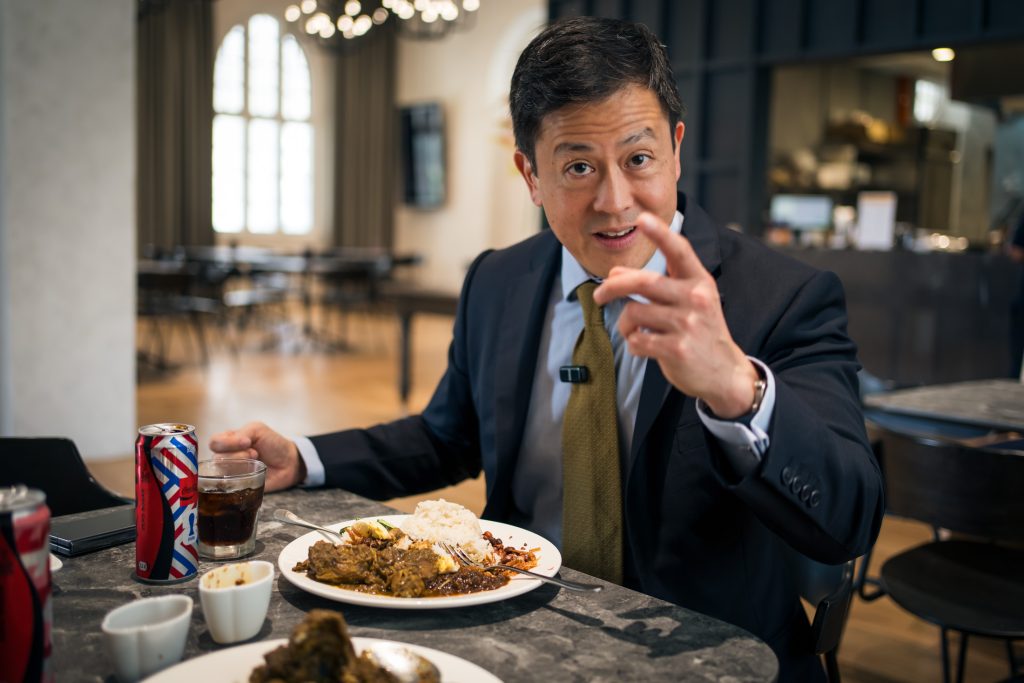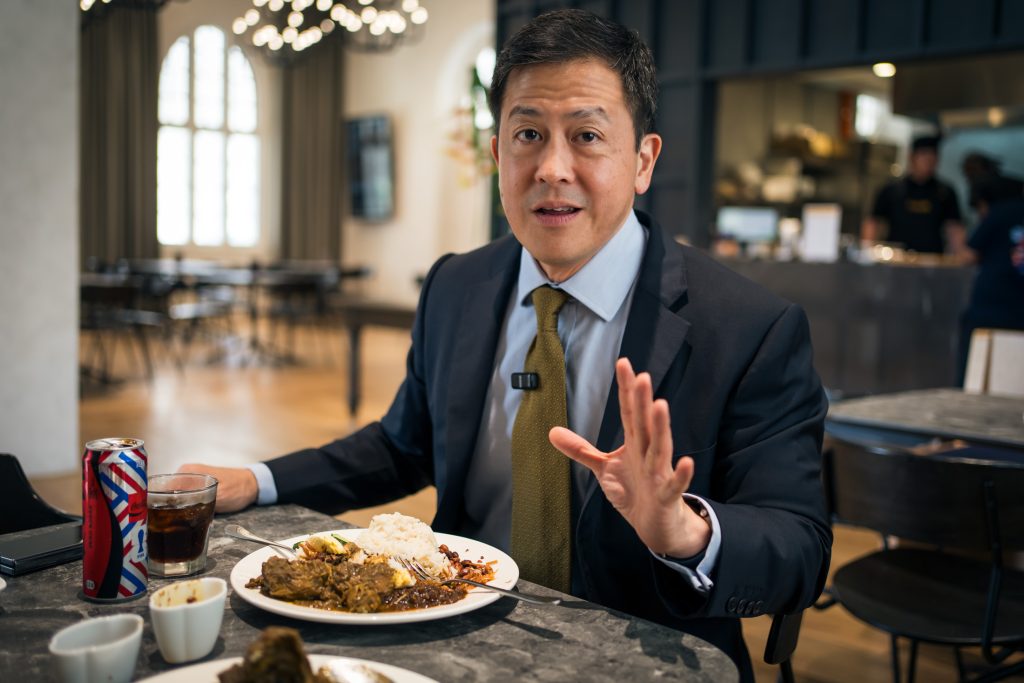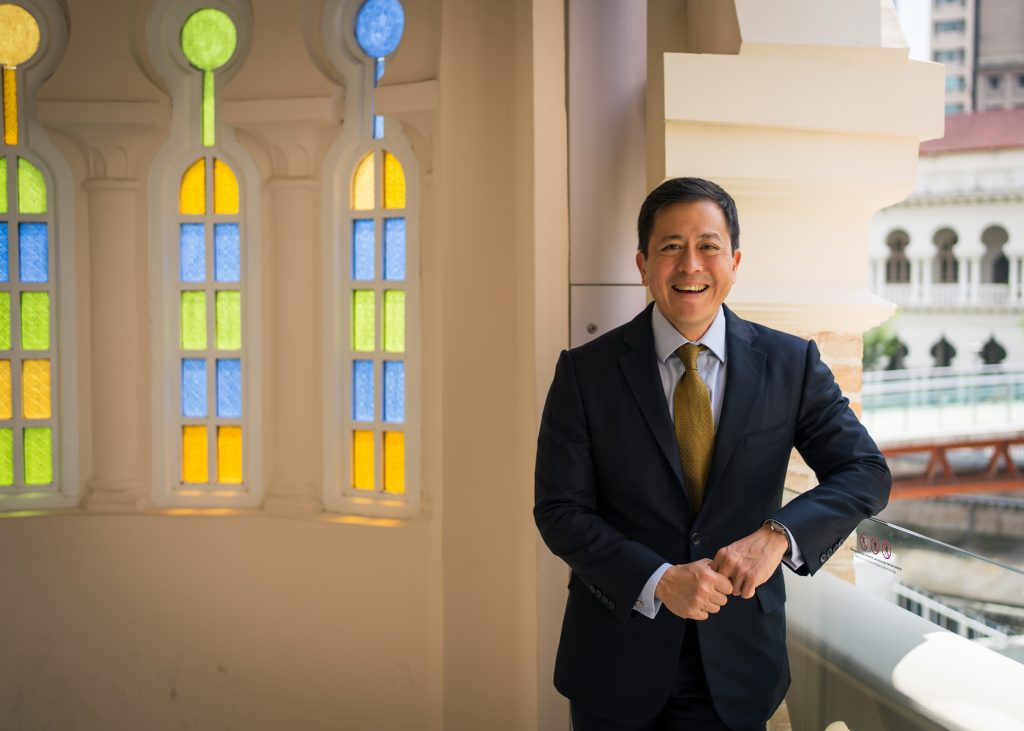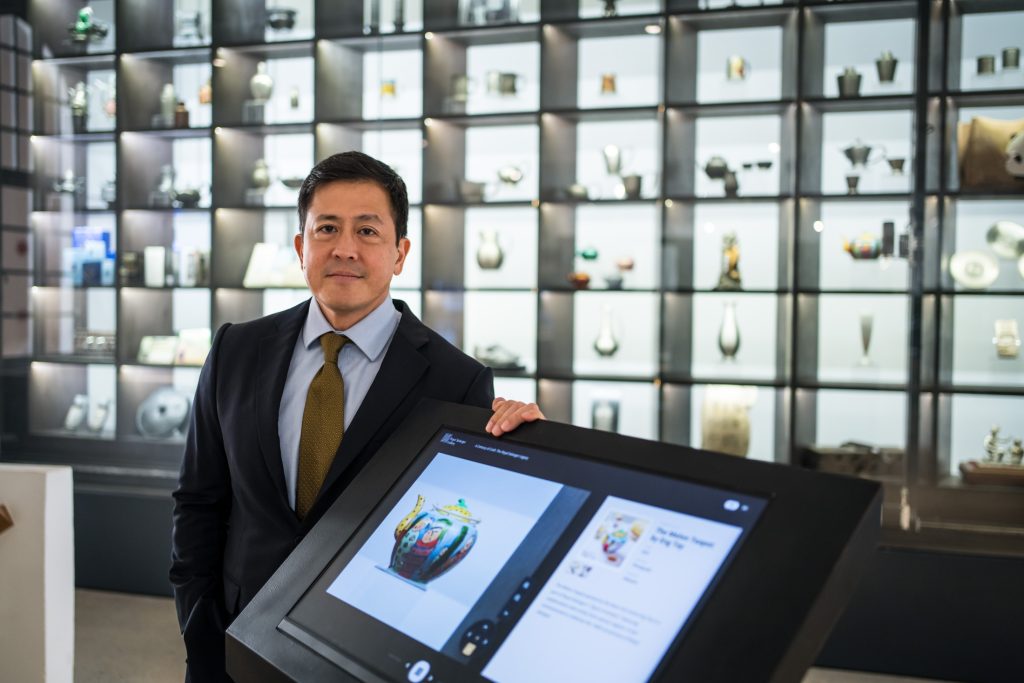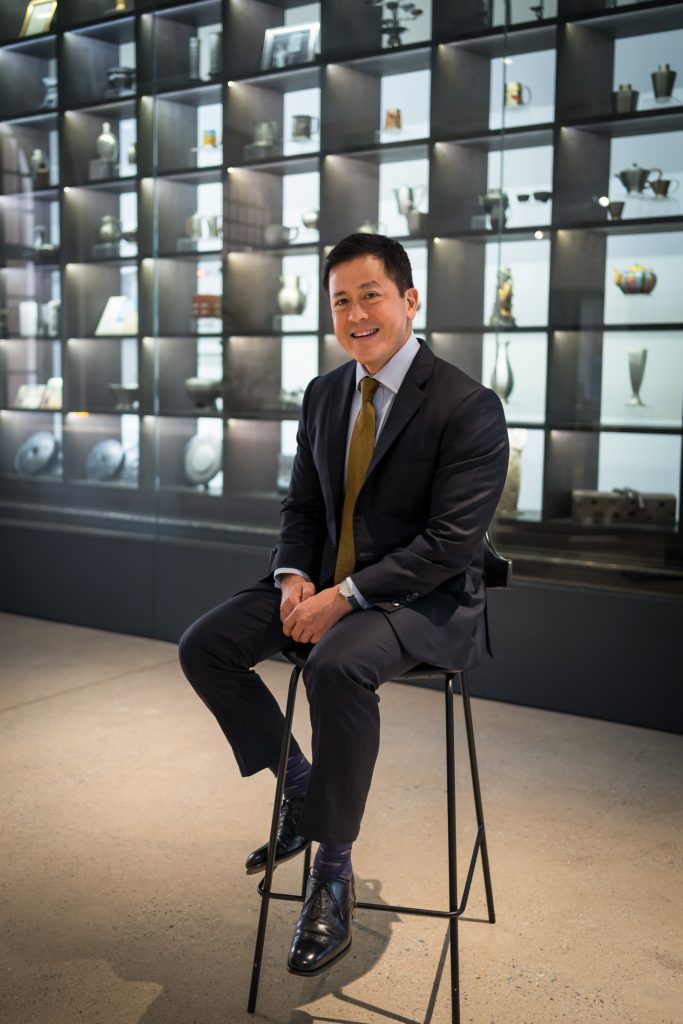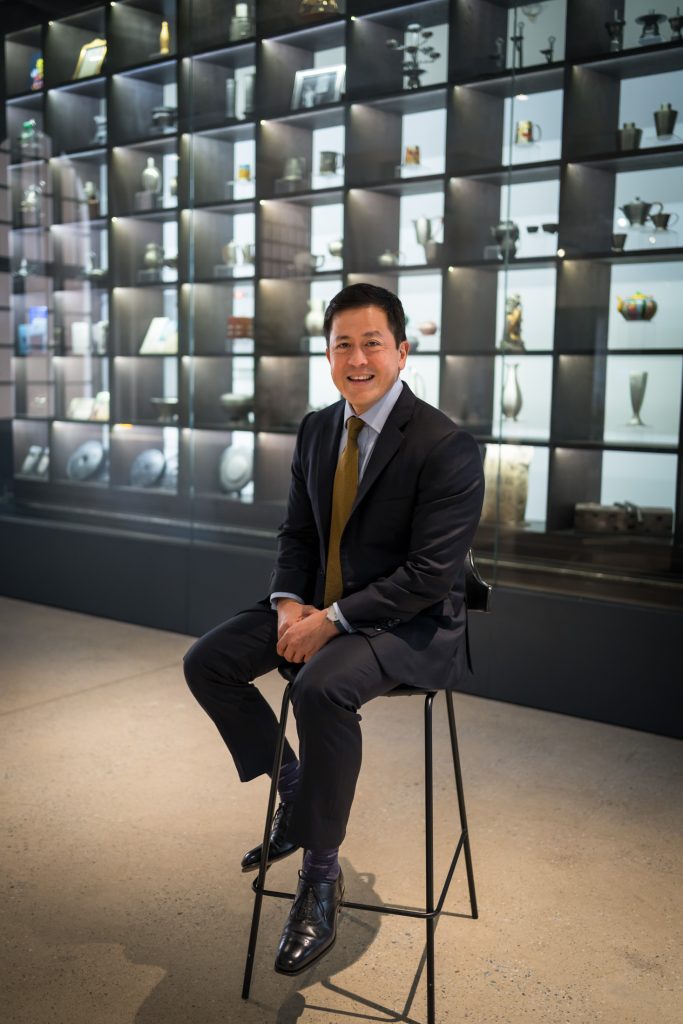
When Dato’ Yong Yoon Li sat down in front of the wall of pewter at Royal Selangor’s gallery in Bangunan Sultan Abdul Samad, I noticed his shoes. They were immaculate. I said he must have people to do that for him. He looked at me as though the suggestion was faintly absurd. I do it myself, he said. I can do a better job.
When the session was done, he reached for the bar stool to carry it back to the cafe. I stopped him. He had seen my hands were full with the camera and the bag. We went upstairs for lunch.
Behind us, the wall held 141 years of the company’s work. Incense burners from the earliest days. Teapots. Tankards. Star Wars figurines. It began with his great-grandfather, Yong Koon, who could not get a job at the tin mine.
Yong Koon was eleven years old when he became an apprentice pewtersmith in the port town of Shantou, in Guangdong province. Three years later, in 1885, he boarded a ship to Kuala Lumpur, joining his brothers, part of the wave of migrants who came to British Malaya for the tin. The mines did not take him. So he made things for the men they did take. Incense burners. Altar pieces. Objects that let miners far from home keep their rituals close. He made them by hand, from pewter, in a small workshop not far from where his great-grandson now sat. A three-minute walk.
Yoon Li is the managing director of Royal Selangor. Fourth generation. Same pewter. Same city. Still here.
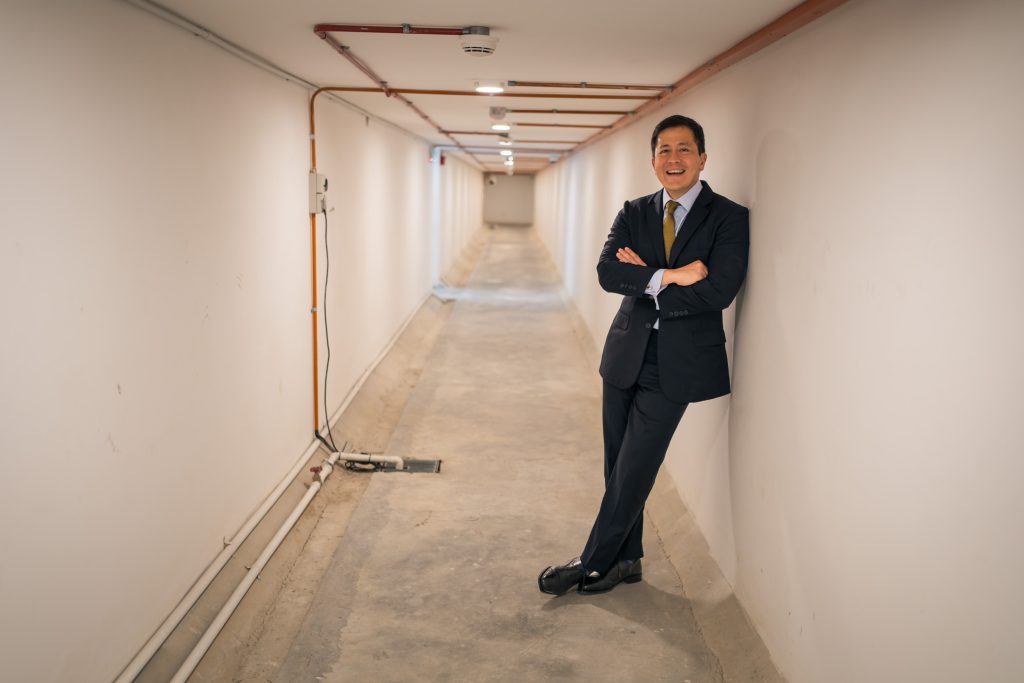
He did not grow up expecting it. As a boy he visited the factory mainly on Fridays and the occasional weekend. It was a cousin who practically lived there. His mother worked half days in the office as a graphic artist, doing typesetting on Letraset. His father was already running things. What Yoon Li remembers is not the business. He remembers following his grandfather around.
His grandfather, Yong Peng Kai, was a perfectionist. Smoked two packets a day, shared cigarettes with his grandmother across the kitchen table, then had a health scare and never smoked again. After he retired in the early eighties he kept coming to the factory. Not to do anything. He just could not stop. When Yoon Li came home during school holidays from England, his grandfather would be there. They spent weekends together. They restored old cars.
MGs. Jaguars. Triumphs. Norton motorcycles. His grandfather had owned them all. Three generations of petrol heads – grandfather, father, grandson. In the late eighties, when Yoon Li came home during holidays, his grandfather would arrive at the house on weekends. They would open the bonnet of a Triumph Spitfire and stand over the engine together. The old man tinkering, explaining, handing tools across. The grandson watching, then doing. Nobody called it training. Nobody called it inheritance. It was just a grandfather and his grandson, side by side, working on something with their hands.
His mother drove Alfa Romeos that his father bought her. They overheated constantly. Yoon Li remembers stopping by the road on the way home from school, waiting for the engine to cool.
They had a Sunbeam Alpine, a small British convertible car with a hood that folded cleanly into the bodywork. One night, Yoon Li drove it home from his grandfather’s house. Five minutes away. The old man insisted on following behind in his own car. Yoon Li took a corner too fast and slid into the longkang. His grandfather, who was about seventy at the time, tied a rope to the bumper and the other end to his vehicle, pulled the Sunbeam out, and said: You see, I told you I should be there.
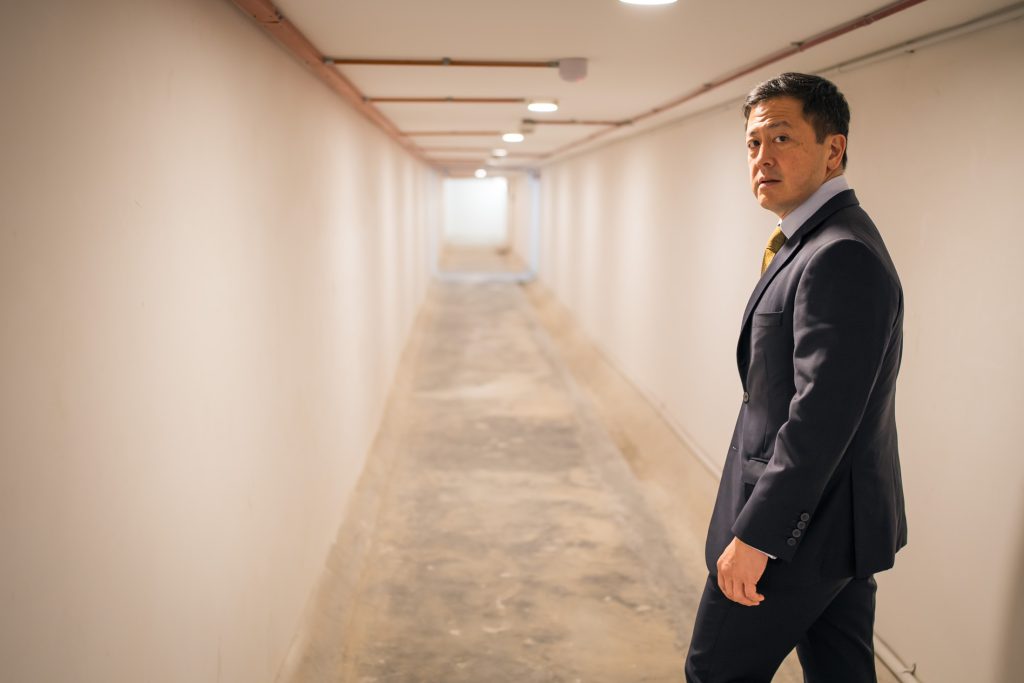
I asked Yoon Li whether his grandfather ever sat him down and passed on wisdom about the business. He laughed. His grandfather never did that. He was not that kind of man. But he was always there. Following behind. Present, just in case.
At fourteen, Yoon Li left for Haileybury, a boarding school in England. Then engineering at the University of Birmingham. Then a decade in the automotive industry – a design engineer with Team Lotus International in Formula One, then Nissan Motorsports, then TVR Engineering in Blackpool before setting up the TVR factory in Port Klang, Malaysia. He was at the drawing board through 1994, the year of Senna and Ratzenberger, the year the sport lost two drivers in a single weekend at Imola. No CAD then. Pencil on plastic film, A1 sheets. Shafts, drop links, brackets, wing end plates. He drew them all by hand.
When I asked him whether he could have stayed, he said he could have. Team principal by now, probably. Then he paused. Can’t, can’t, he said. Very stressed. Hand to mouth.
The family charter says that no family member may join the business without first building a career outside it. No one joins without being asked. The charter was written by his father’s generation, after the conflict that nearly destroyed the company. In the second generation, the sons of Yong Koon fought. The business split into rival operations. Only one survived. The lesson was not forgotten.
He came back in 2005, invited rather than summoned. His cousin, Chen Tien Yue, came back around the same time, from McKinsey. One from the pit lanes of Formula One, one from consulting. They have run the business together ever since. Of eleven fourth-generation family members, they are the only two who work in it full-time. A third cousin, Chris Yong, headed the design team for twenty years before passing away from cancer.
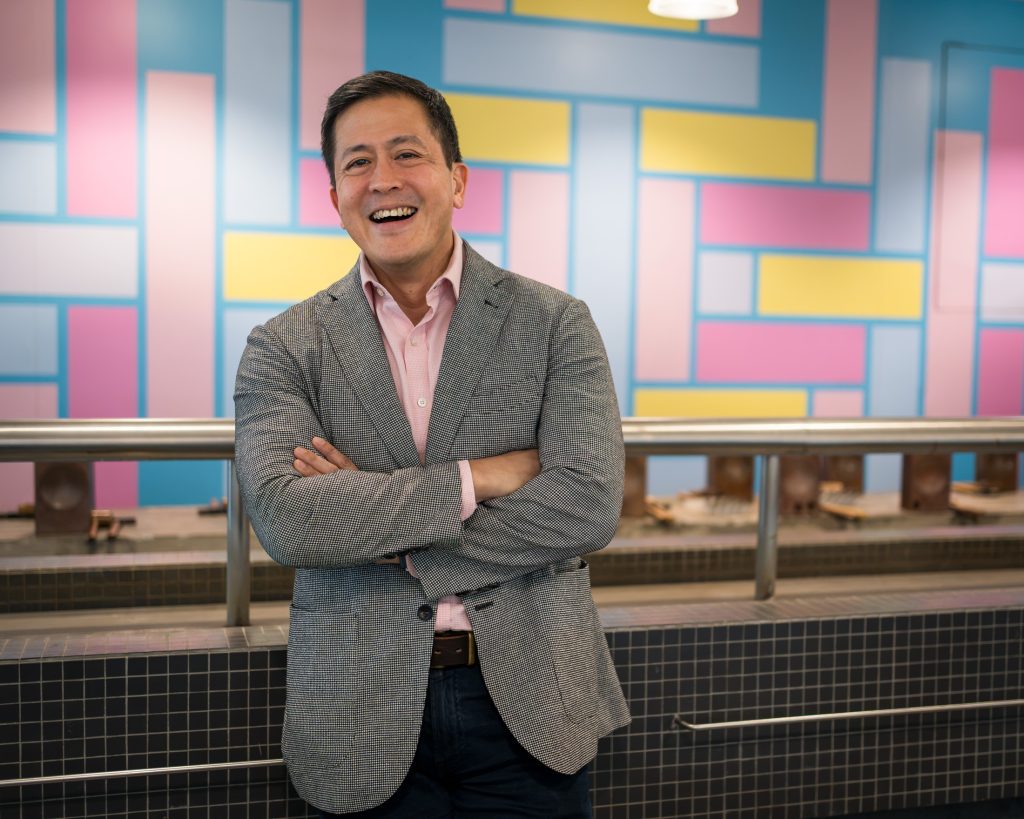
The family still meets every eighteen months or so. No fixed agenda. Some housekeeping business. The whole family gathered, so that everyone knows what is happening in each other’s lives – and in the company. It is written into the charter. It is simply what they do.
I asked him what drew him back to Royal Selangor. It is a good business, he said. An honest one. No tariffs to chase. No lobbying. No looking over his shoulder. The only thing that keeps him up at night is simpler than all of that: how do you keep your people employed when times are tough.
During COVID, the factory was shut. Tourists stopped coming. They were not even allowed to produce. He and his cousin talked it through. What did not work. What else they could try. They kept the online shop going. They fulfilled orders from warehouses in Singapore and Australia. They designed a passive amplifier, the Phonos, entirely by remote – prototypes sent across the city by Lalamove, drawings and sketches by WhatsApp and email – because the designers could not meet. They kept people employed.
I asked him whether he guards his techniques from other pewter makers. He looked at me as though the question was outdated. Come on, he said. You have got the internet. They can find out already.
Other factory owners tell him they cannot find local workers anymore. He is not sure that is true. A local worker can leave any morning he likes. That means you have to give him a reason to stay.
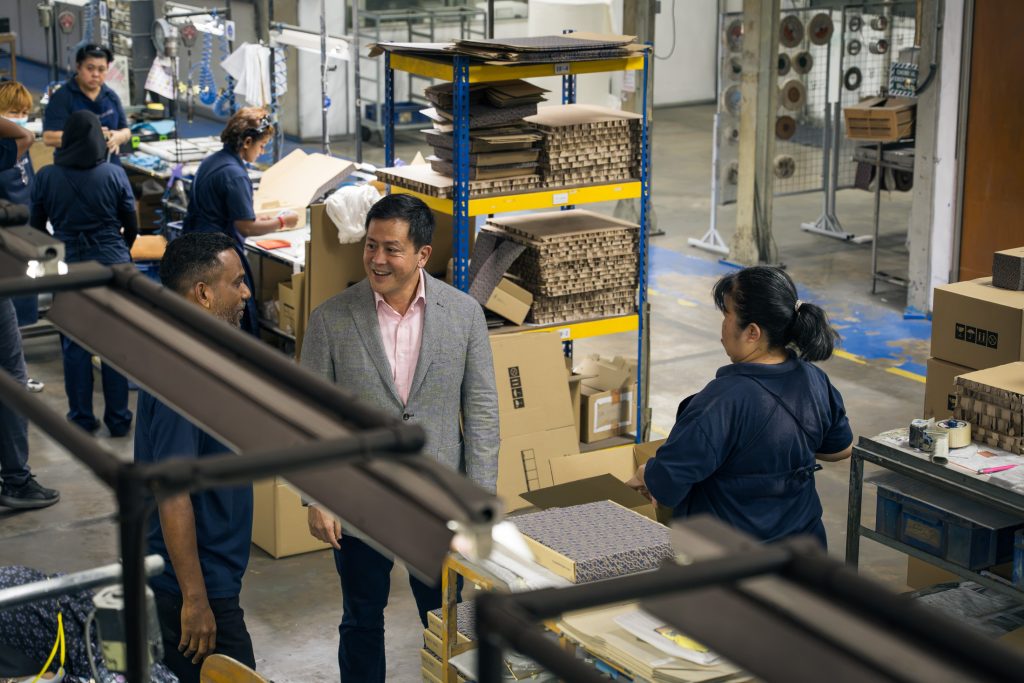
There is a man named Ramesh who proves the point. He came to Royal Selangor as a school leaver, a production operator straight out of Form Five. The company noticed he was eager and sent him to vocational school. He learned to programme CNC machines and became the supervisor running half a dozen of them. After twenty years, Yoon Li told him it was time to step up and become a factory executive. Ramesh did not want to. He earned more as a supervisor. Yoon Li matched his salary so he would not lose a ringgit by moving up.
Not long after, Ramesh had a heart scare. A stent. He is in his forties, skinny, with a young family – you would not think there was anything wrong with him. Royal Selangor pays for his private medical care. Too much banana leaf rice, Yoon Li told him. Watch yourself. Then he moved on to the next thing.
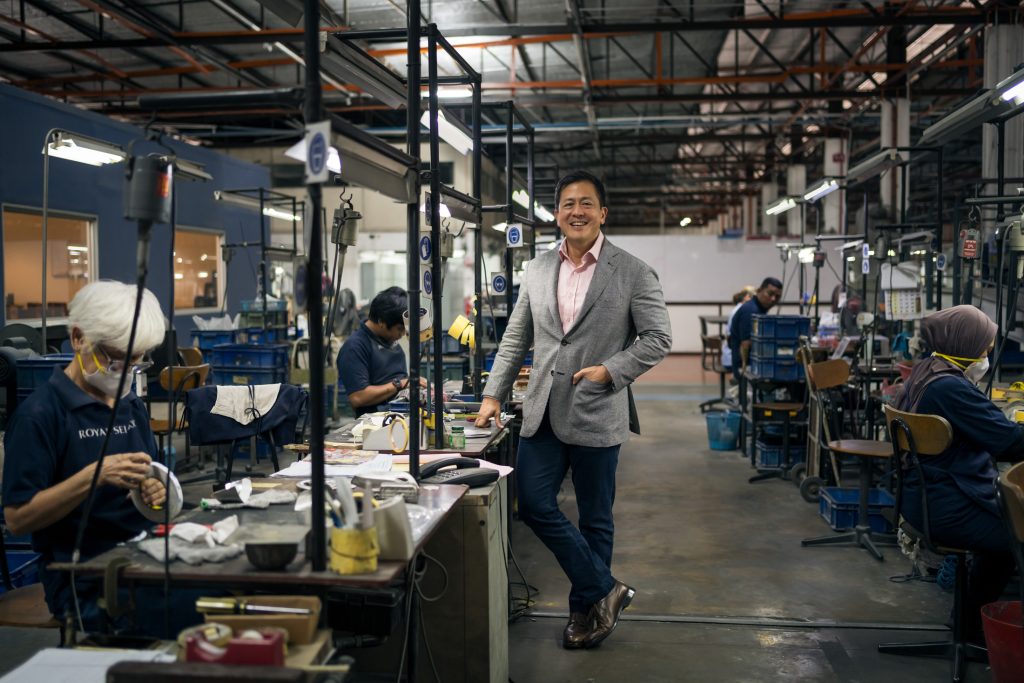
Royal Selangor has 155 smiths on its factory floor, all Malaysian. Some have been there forty-five years. Others three months. After COVID, young school leavers started coming in and staying. Sanding first, then polishing, then soldering pieces together. Getting better and better. Yoon Li does not know why. Something in the water, he said. But they stay.
He brought a retired German jeweller, Gerd Neumann, back to the factory for five weeks to teach a new generation of hand engravers. The old engravers sat beside the young ones. Gerd stood over their shoulders, adjusting the angle of a graver, moving a hand half a millimetre. Five weeks, and then he was gone. What stayed was in the hands.
He brings in young designers now – twenty-five, twenty-eight years old – alongside one or two older ones who have been there a decade or more. The first four coasters in the current range were designed by his late cousin. The next three or four were designed by kids. They looked at how it was done before. They applied a new interpretation. It is only a coaster. Not a USB charger. Not an LED screen. But the hands that hold it are younger, and the work changes with them.
The designs still begin as hand sketches, or clay sculpted by hand. Royal Selangor uses 3D printing. They use CNC machines. But the monthly design meetings still ask one question: who originated this? A craftsman who has spent his life making teapots knows something about that object that no machine can replicate. He will not suddenly go and make a toast rack. His knowledge is his teapots.
Walk through any home, he said, and count the photo frames on the walls. Not the ones on phones. The ones given a permanent place. Parents. Weddings. Children. In Australia, when someone turns twenty-one, they receive a Royal Selangor tankard. In the UK, when a baby is born, it is a tooth box, a trinket box, a frame. People are not buying pewter. They are deciding which memories deserve to stay.
I asked him what it felt like to be a steward on the days it was hardest, when the factory was shut and nobody knew when the doors would open again. He said he never really felt the pain of it. It was more that every problem had a next step. If this does not work, you try this. If that does not work, you try something else. And if it works, you do more of it.
He does not call himself a leader. He prefers steward. His father held it before him. Someone else will hold it after.
I asked him what his great-grandfather would think if he walked into the factory today. He paused. He sat with it. Then he said the processes would still be recognisable. The scale is different. The products are different. But the way things are made – by hand, by someone who has learned from the person beside them – that has not changed. His great-grandfather would know exactly what he was looking at.
The original conditions are gone. The tin boom ended. The miners left. The ground they worked on became a city. 141 years. Four generations. The same material. The same hands. A man who could not get a job at the mine made something that outlasted the mine. The carrying is the work.
Dato’ Yong Yoon Li is the managing director of Royal Selangor.
This portrait is part of Born in Malaysia – How We Hold On, a photography and storytelling project by Kenny Loh. www.kennyloh.com