I arrived in Melaka two days before the Tok Panjang.
The day before the dinner, I went to the market for ingredients. I moved from one stall to another, picking what was needed, vegetables, meat, things that would later find their place on the table. It still felt far away from the meal itself.
That same morning, Elena Koshy from The New Straits Times arrived with Susan Ann Lai and her daughter. They had driven down from Kuala Lumpur, and we were all staying at a friend’s place.
Elena had written about Susan last year, about her growing up with her Malay neighbour, Hisham Idris, and the bond they shared.
It felt right that they were both here. These stories tend to find one another.
Elena had not come to Melaka by chance. Long before we arrived, I had already asked her to work on this story for The New Straits Times. Eng Leong had originally wanted to prepare the Tok Panjang just for Born in Malaysia, but I felt what he was doing deserved a wider audience. It was too rich, too rooted, to remain only within my own project.
Back at Eng Leong’s house, ingredients were cleaned and set aside. The cooking would only begin in the morning.
The house is a story on its own. As you walk in, the family altar takes up the reception area, the kind that commands the space rather than simply occupies it. Further in, past a wall, the house opens into a large area filled with light from a skylight above. Old Melaka houses were built long and narrow, and without that opening to the sky, the interior would have been too dark to live in. The light falling through it made the space feel both enclosed and open at once.
The photographs were mostly hung on the walls, wedding portraits of his parents and his grandparents, formal and still, the way photographs used to be. Faces that had been in this house for decades, watching the same rooms.
You don’t need anyone to explain it.
The next morning, I went straight to the kitchen.
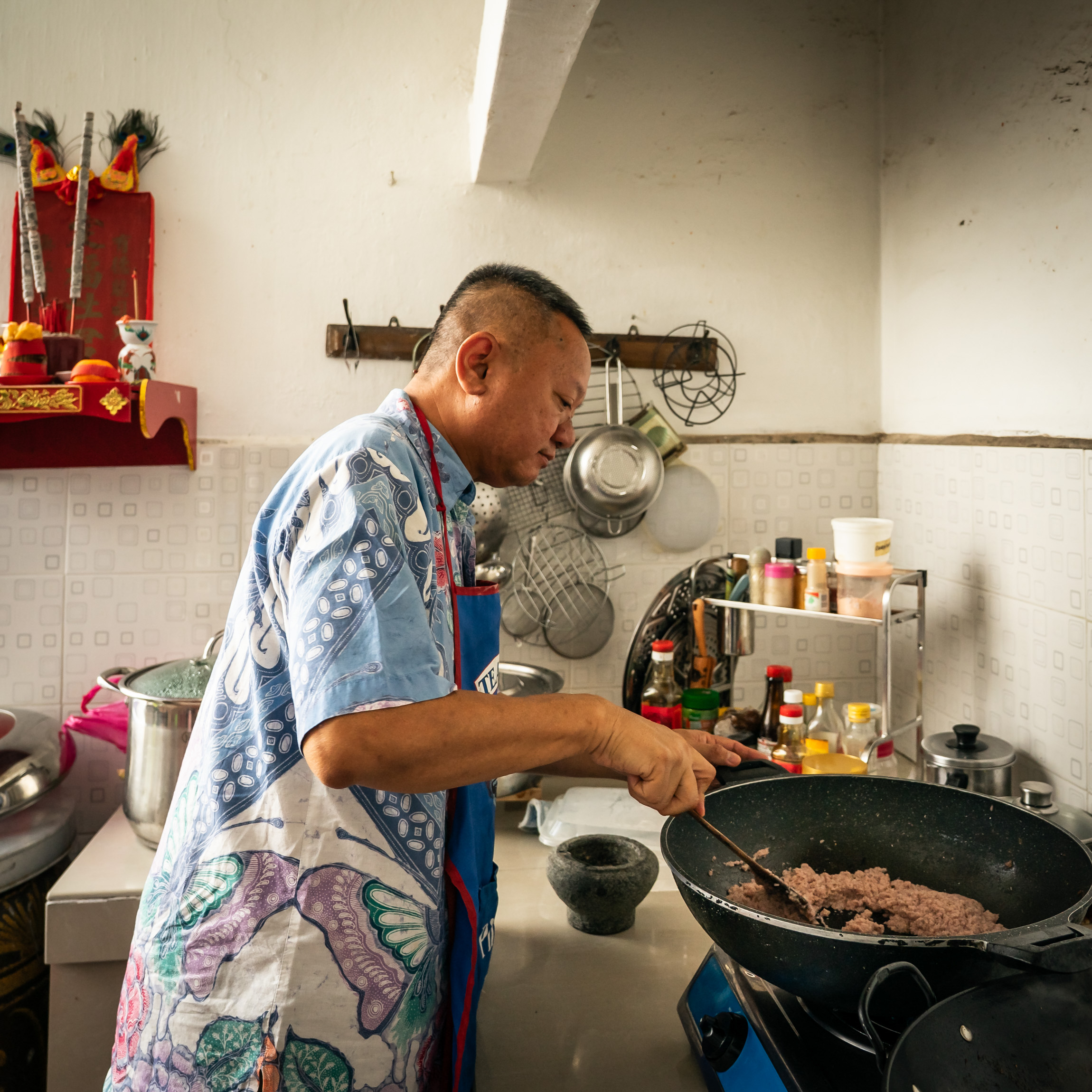
Eng Leong was already working. The dishes were being cooked one by one, filling the kitchen as they came together. No instructions, no checking of recipes. Just a steady rhythm. The kind of cooking that comes from memory.
He did not cook alone. His auntie and his sister were there with him, both cooks in their own right. They moved around each other easily, stepping in when needed, stepping back when not. There was no need to explain anything. It was already understood.
I stood there for a while, watching.
There is something about watching someone work like that. You start to notice the small things, the way he leans forward, the pause before something is done, the quiet confidence in every movement.
Before anyone sits down at the table, most of the story has already happened.
That evening, the Tok Panjang was held at a private museum along Jonker Street.
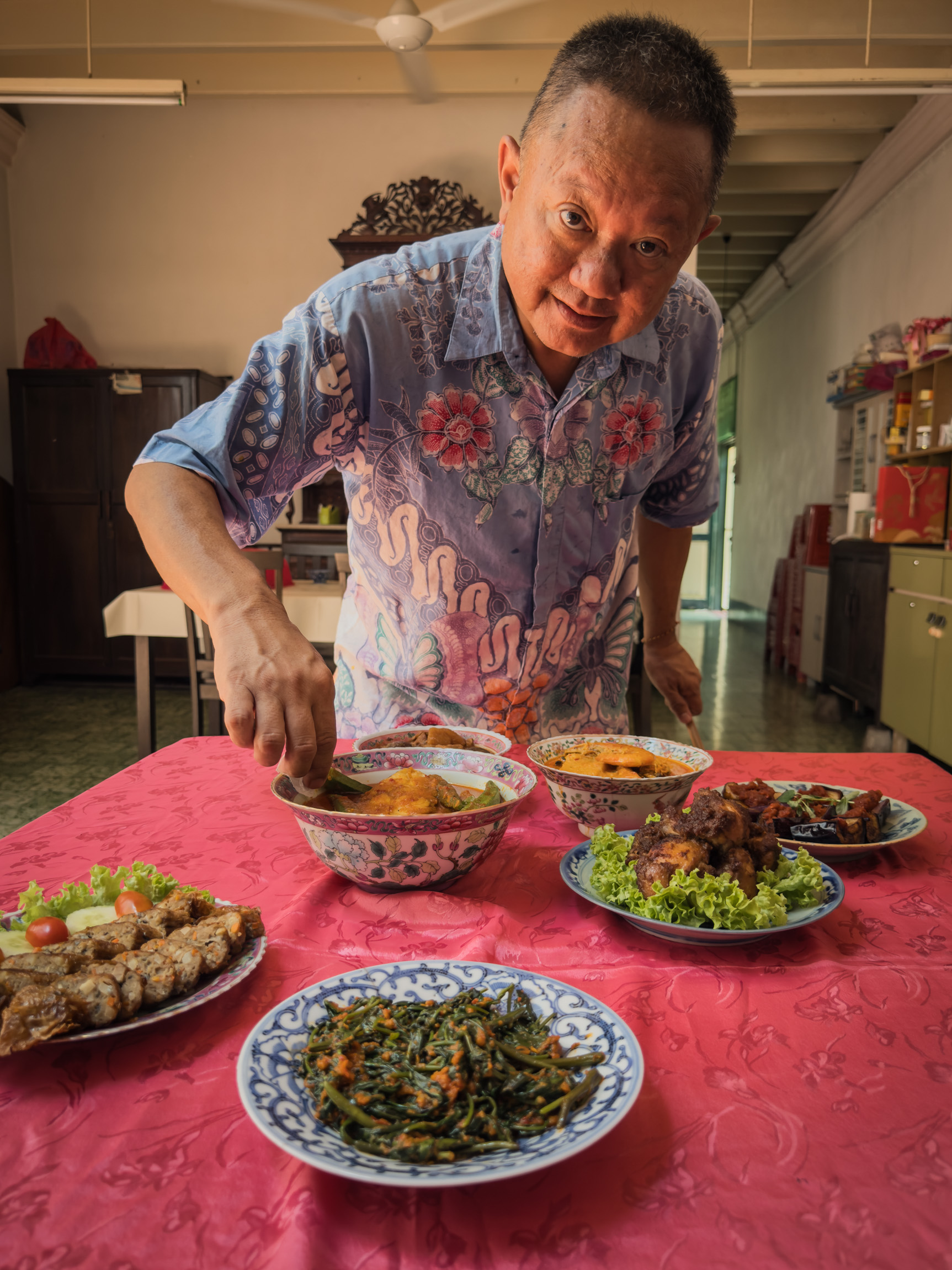
Eng Leong arrived in batik, transporting the food he had prepared earlier with the help of his two sisters. The dishes did not arrive plated. They came in pots and large serving plates, carried in, unpacked, and only then heated up and plated.
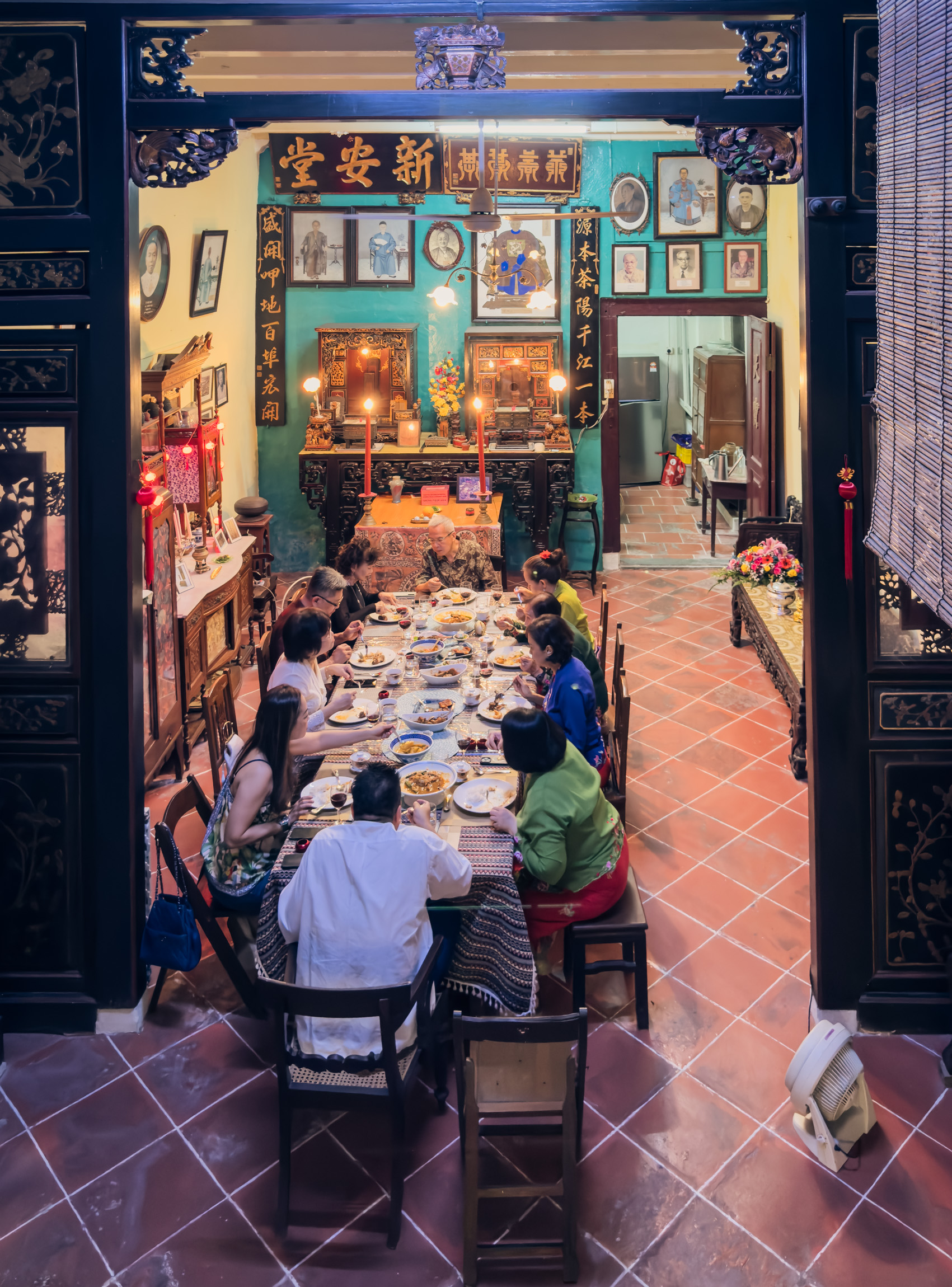
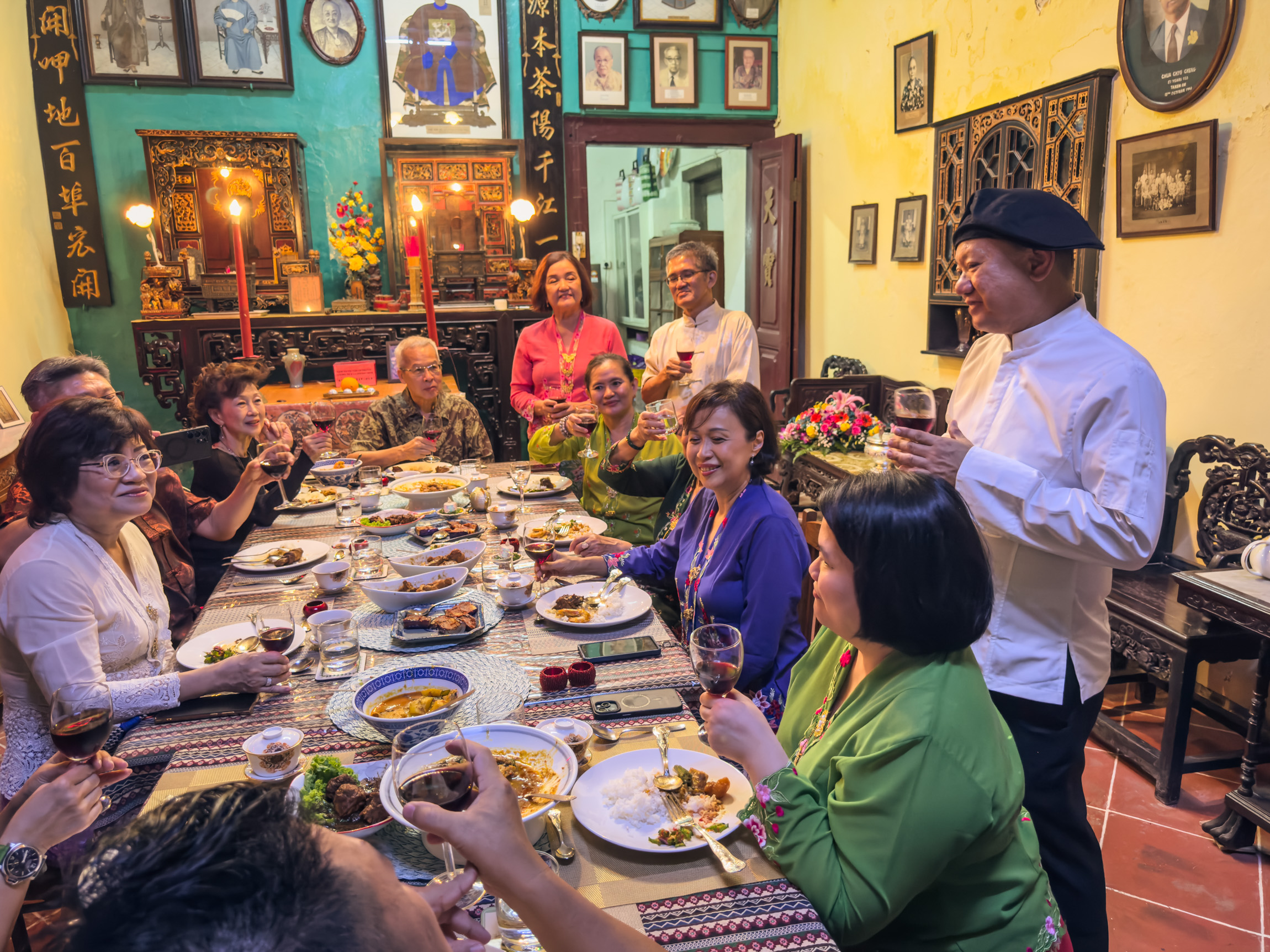
By the time everything was set, the space had already taken on its own presence. The long table arranged, the room holding everything together, the altar at the far end, photographs on the walls. It did not feel like something arranged for the night. It felt like something that had always been done this way.
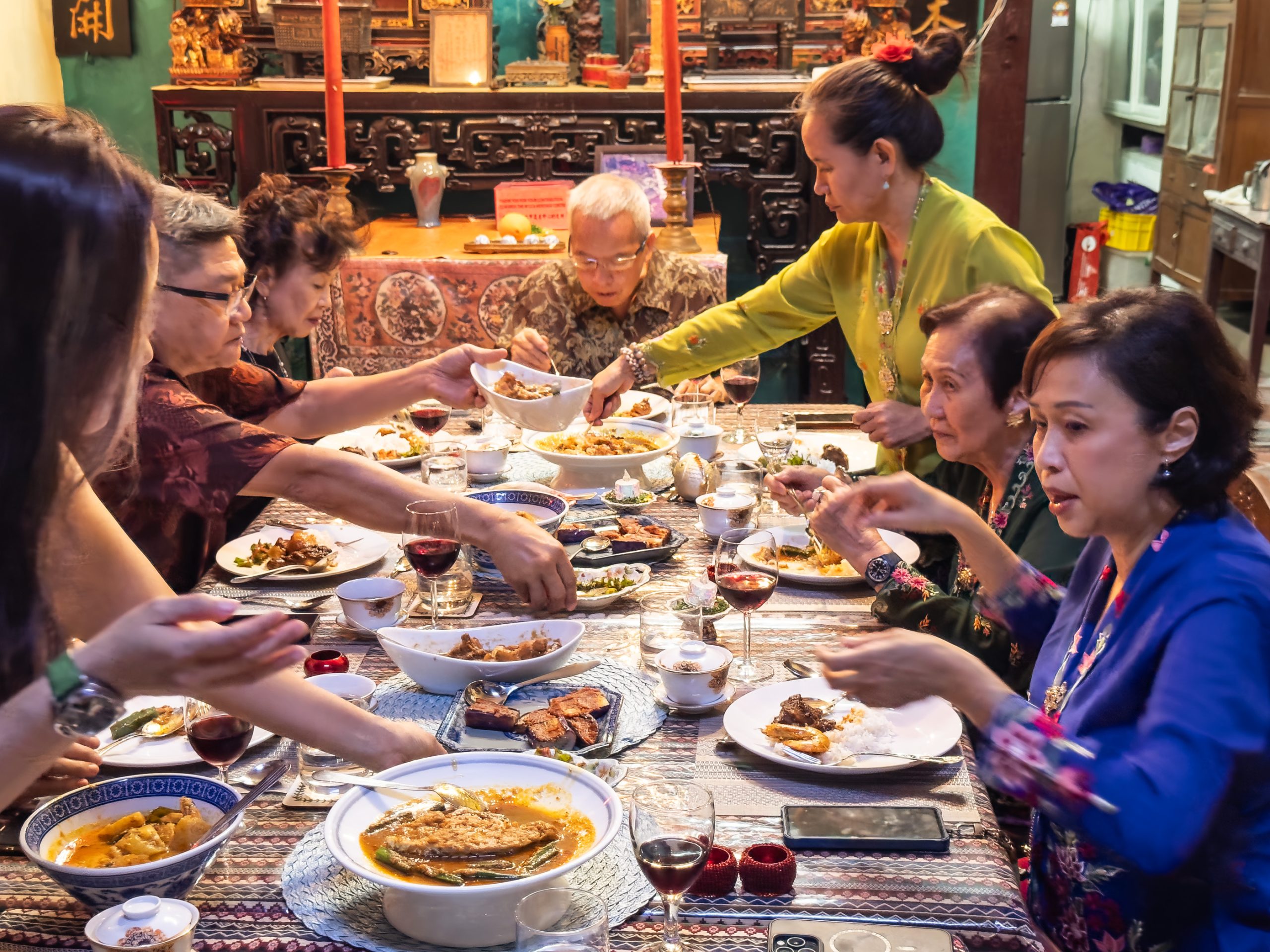
When the meal began, the table came alive.
People reached across one another. Food was passed without asking. Conversations started and overlapped. No one directed it. It found its own rhythm.
From the outside, it looks like a meal. When you’re there, it is something else.
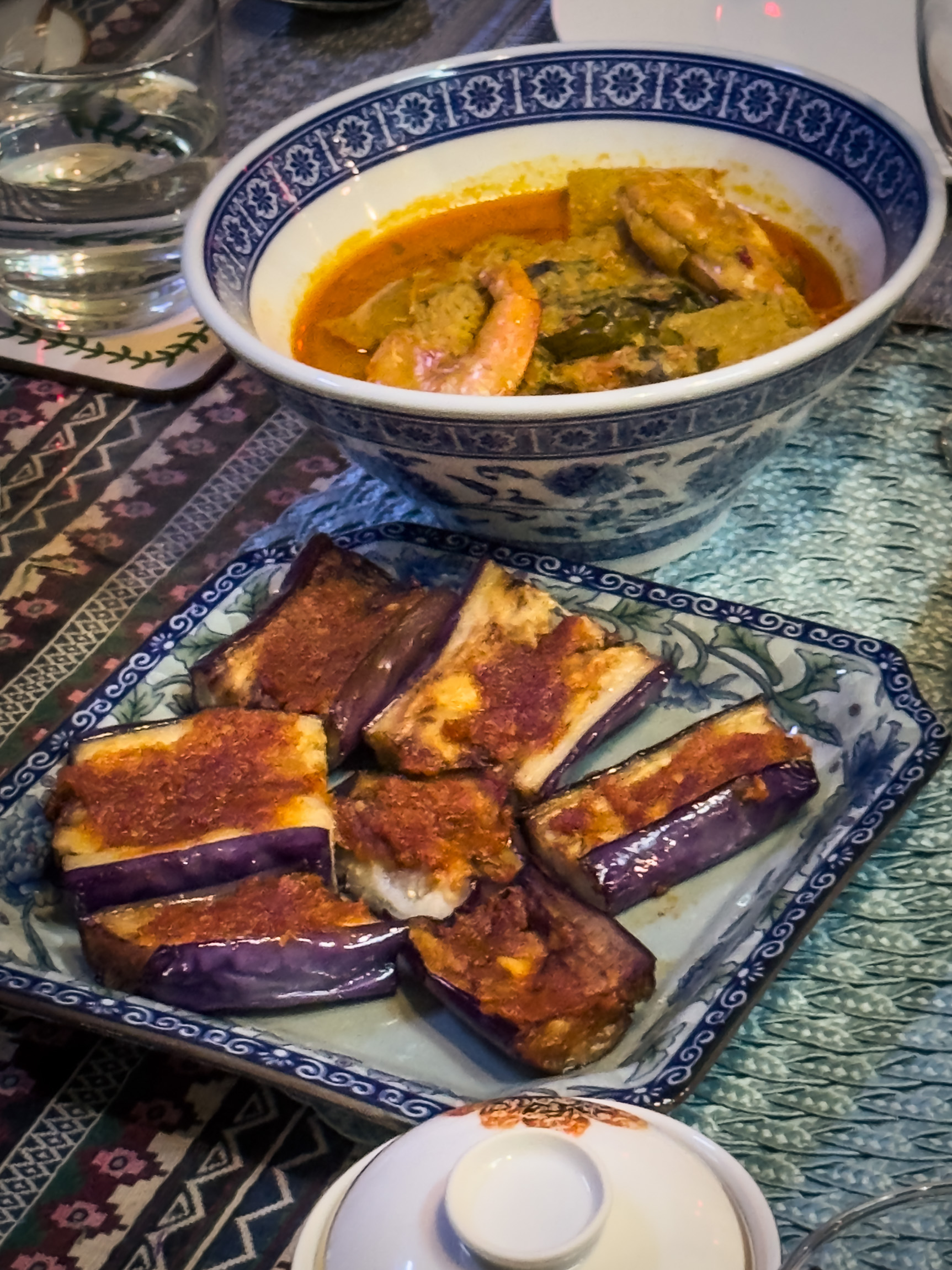
There was one dish on the table that stayed with me.
Terong Temprah.
Eng Leong told me he learnt it from his Kong Ngah, his paternal aunt, many years ago, after he had just been retrenched and was trying to start over with a small Nyonya food stall in Petaling Jaya. He did not have the chance to learn it from his mother. She had already passed on.
So his Kong Ngah came over to teach him, patiently, step by step.
He spoke about the dish as something simple, but it isn’t. The aubergine has to be cut a certain way and fried until soft. The sambal has to be cooked slowly until the oil separates, the flavours coming together without rushing it. These are small things, but they matter. They are what make the dish what it is.
Listening to him, you begin to understand that what we were eating that evening was not just food. It was something carried forward, from his Kong Ngah, and from his mother, in a different way.
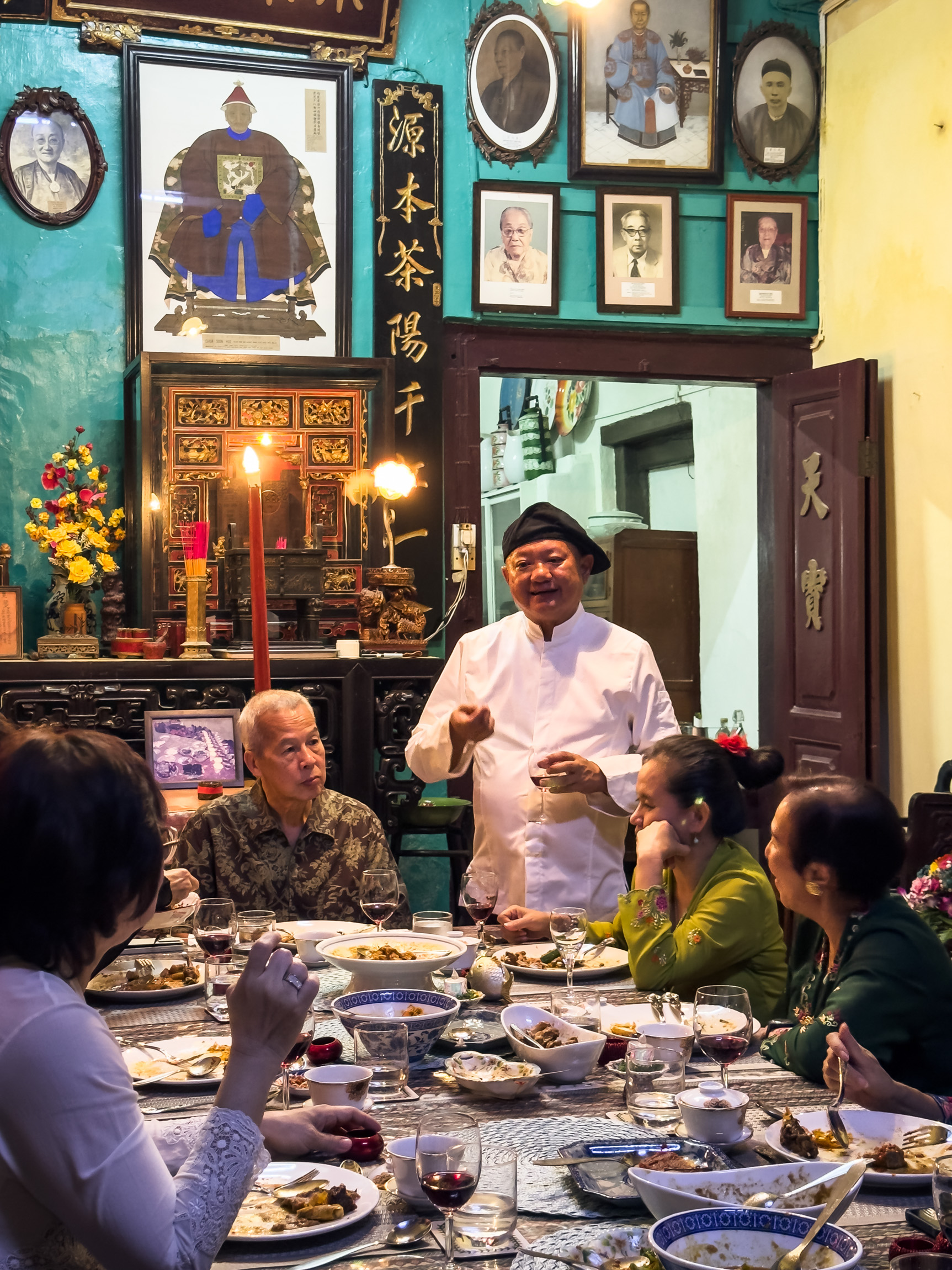
Halfway through the evening, Eng Leong stood beside the table and spoke about his mother, about how much of what we were eating came from her, the recipes, the way things were done.
The room quietened. People listened.
You could hear it in his voice. Not just what he said, but how he said it. The weight of it.
I felt it too.
Then, sometime in the second half of the evening, he stepped away and returned in chef’s whites.
It was more than a change of clothes. When he walked back in, something had settled into place. The batik had carried the earlier part of the evening, the son, the family, the inheritance on the table. The whites said something different. They said: this is also a craft. This is also a discipline. He was not just someone cooking his mother’s recipes. He was a professional who had spent years learning what it means to do this properly, and that too was part of what we were eating.
Both were true at once. That was the point.
I spoke to him later, quietly. I told him his mother would have been proud of him, the way he has carried it forward, not just cooking the dishes, but keeping something of her alive in them.
I moved around the table for a while, taking a few photographs, then stepping back again. There is always that balance, being close enough to see, but not close enough to interrupt.
At one point, I stood further back and just watched. The whole table in front of me, people settled into the evening, the movement, the noise, the small moments that don’t ask to be noticed but stay with you anyway.
These are the moments I find myself returning to in Born in Malaysia.
Not events. Not performances. Just the way things continue, quietly, without needing to be explained.
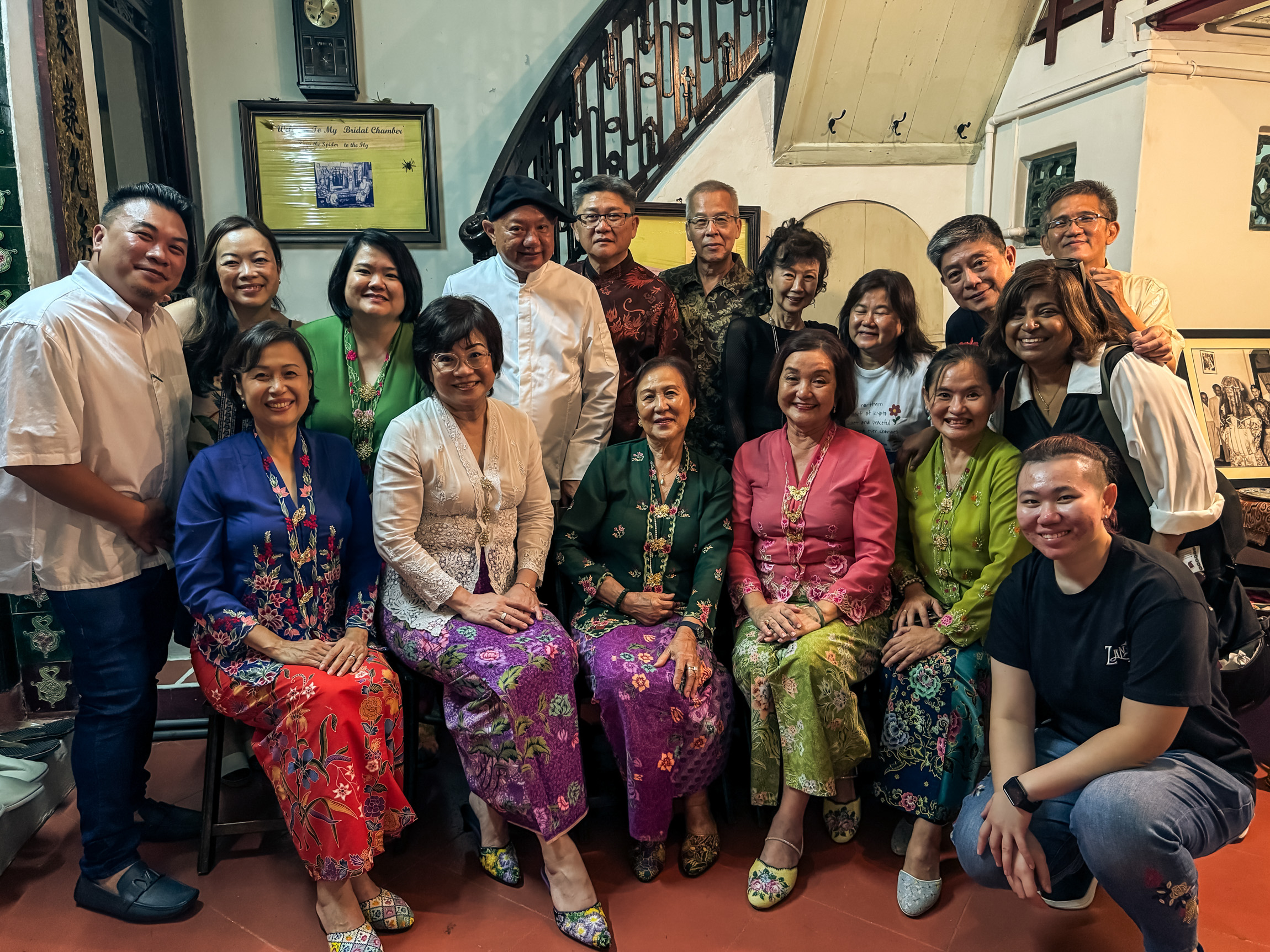
Before I left, I took a quick photograph with them, just a small record that I was there, inside it, not just looking in.
This Melaka story will become part of the next Born in Malaysia.
I am still gathering it, one place at a time.